Introduction
Choosing the right AWS consulting partner can mean the difference between a successful cloud transformation and a costly mistake. With thousands of companies claiming AWS expertise, how do you identify truly qualified partners?
This detailed guide covers the 10 critical questions you must ask, along with red flags to avoid and green flags to look for.
Why Your AWS Partner Choice Matters
The wrong AWS partner can lead to over-provisioned infrastructure costing more than necessary, security vulnerabilities, failed migrations, and technical debt. Conversely, the right partner brings proven methodologies, certified expertise, and hands-on experience with similar challenges in your industry.
Here are 10 questions to ask while evaluating your AWS partner.
Question 1: What Is Your Current AWS Partner Tier and Competency Status?
AWS partnership tiers represent validated technical capability and customer success metrics.
What to Ask: “Can you show me your current AWS Partner Network tier and which competencies you hold?”
Green Flags ✓
- Advanced or Premier Consulting Partner status with recent validation
- Multiple AWS Competencies relevant to your needs (Migration, DevOps, Machine Learning)
- Willingness to share their APN profile link for verification
- Active participation in AWS programs like MAP (Migration Acceleration Program)
Red Flags ✗
- Vague answers or deflecting to “we work with AWS”
- Registered or Select tier claiming Premier-level expertise
- No industry-specific competencies when you need specialized knowledge
- Refusing to provide verifiable credentials
Verify: Visit the AWS Partner Directory and search for the company. Filter by partner tier, competencies, and location.
Question 2: How Many AWS-Certified Professionals Are on Your Team?
AWS certifications validate hands-on technical knowledge and indicate depth of expertise.
What to Ask: “How many team members hold AWS certifications, and at what levels? Who specifically would work on our project?”
Green Flags ✓
- High ratio of certified professionals (40%+ of technical staff)
- Mix of Associate, Professional, and Specialty certifications
- Recent certifications (AWS exams expire after 3 years)
- Specialty certifications matching your use case (Security, Advanced Networking, Machine Learning)
Red Flags ✗
- Unable to provide specific numbers or names
- Only entry-level certifications on the team
- No specialty certifications for complex requirements
- Certifications concentrated in sales staff rather than engineers
Question 3: Can You Share Case Studies From Similar Projects in Our Industry?
Industry-specific experience means the partner understands your compliance requirements and business challenges.
What to Ask: “Do you have case studies from companies in our industry with similar challenges? Can we speak with those references?”
Green Flags ✓
- Detailed case studies with metrics and outcomes
- Specific industry experience with compliance standards (HIPAA, PCI-DSS, SOC 2, GDPR)
- Willingness to provide contactable references
- AWS case studies or blog posts featuring their work
Red Flags ✗
- Only generic examples with no measurable outcomes
- No case studies in your industry or adjacent fields
- References that can’t be contacted or verified
- Unwillingness to discuss past challenges or lessons learned
Key Questions for References: Did the project finish on time and on budget? How did they handle unexpected challenges? Would you hire them again?
Question 4: What Is Your Methodology for AWS Migrations?
A structured methodology reduces risk and accelerates time-to-value.
What to Ask: “Walk me through your step-by-step process. How do you ensure best practices?”
Green Flags ✓
- Follows AWS Well-Architected Framework with documented review processes
- Structured phases: Discovery, assessment, planning, pilot, execution, optimization
- Infrastructure as Code (IaC) approach using Terraform, CloudFormation, or CDK
- Testing and validation procedures at each phase
- Clear knowledge transfer and documentation built into the process
Red Flags ✗
- “We’ll figure it out as we go” approach
- No mention of AWS best practices or frameworks
- Skipping discovery/assessment phases to “save time”
- Manual configurations instead of IaC
- No testing strategy or rollback plans
Question 5: How Do You Approach Cost Optimization?
Studies show that 30-40% of cloud spending is wasted on over-provisioned resources and unused services.
What to Ask: “What strategies do you use to optimize AWS costs? Can you show examples of cost savings you’ve achieved?”
Green Flags ✓
- Proactive cost monitoring with AWS Cost Explorer or third-party FinOps platforms
- Right-sizing recommendations based on actual usage patterns
- Reserved Instances and Savings Plans strategy
- Automated cost optimization using AWS Compute Optimizer
- Documented examples showing 20-40% cost reductions
Red Flags ✗
- “AWS is always cheaper than on-premise” without analysis
- No mention of cost governance or monitoring
- Pushing expensive services without justification
- Commission-based compensation tied to AWS spending (conflict of interest)
Question 6: What Security and Compliance Measures Do You Implement?
Your AWS partner must implement enterprise-grade security from day one, not as an afterthought.
What to Ask: “How do you ensure our AWS environment meets security best practices and our compliance requirements?”
Green Flags ✓
- AWS Security Specialty certification on the team
- Clear understanding of Shared Responsibility Model
- IAM best practices with least-privilege principles
- Encryption at rest and in transit by default
- Security monitoring with GuardDuty, Security Hub, CloudTrail
- Compliance framework experience (SOC 2, ISO 27001, HIPAA, PCI-DSS)
Red Flags ✗
- “AWS handles all security” (misunderstanding shared responsibility)
- Root account usage or shared credentials
- No encryption strategy
- Public S3 buckets or overly permissive security groups
- Compliance as an afterthought rather than built-in
Question 7: What Does Your Support Model Look Like?
Cloud environments require ongoing management, optimization, and support beyond the initial migration.
What to Ask: “What happens after go-live? What support options do you offer, and what’s included?”
Green Flags ✓
- Tiered support options with clear SLAs (response times, resolution times)
- 24/7 support availability for production issues
- Proactive monitoring and alerting included
- Regular optimization reviews (monthly or quarterly)
- Dedicated account manager or technical lead
Red Flags ✗
- “Call us if something breaks”, a reactive approach
- No defined SLAs or response times
- Support only during business hours for production systems
- Separate charges for every minor change or question
- Unclear escalation path for critical issues
Question 8: How Do You Handle Knowledge Transfer?
A good partner empowers your team to manage AWS independently while remaining available for strategic guidance.
What to Ask: “How will you train our team to manage AWS? What documentation do you provide?”
Green Flags ✓
- Structured training programs customized to your team’s skill level
- Documentation, including architecture diagrams, runbooks, and SOPs
- Hands-on workshops during implementation phases
- Gradual handoff approach rather than abrupt transition
Red Flags ✗
- Proprietary tools or processes that lock you in
- Unwillingness to share documentation or credentials
- “You’ll always need us” mentality
- Knowledge hoarding as a retention strategy
Question 9: What Tools Do You Standardize On?
Tool choices impact long-term maintainability, required team skills, and potential vendor lock-in.
What to Ask: “What tools do you use for infrastructure as code, monitoring, and automation? Why those choices?”
Green Flags ✓
- Open standards and portable technologies (Terraform, Kubernetes)
- AWS-native services where appropriate (CloudFormation, CDK)
- Industry-standard tools with strong communities
- Flexibility to adapt to your existing tools and preferences
- Version control for all infrastructure code (Git)
Red Flags ✗
- Proprietary tools or platforms requiring licensing
- Obscure or abandoned technologies
- “Our secret sauce” that can’t be explained
- No source control or automation
Question 10: Can You Provide Transparent Pricing?
Hidden costs and unclear pricing lead to budget overruns and damaged relationships.
What to Ask: “Can you break down your pricing model? What’s included, what’s extra, and what potential additional costs should I plan for?”
Green Flags ✓
- Detailed, itemized proposals with clear deliverables
- Multiple pricing models offered (fixed-price, time & materials)
- Transparent hourly or daily rates by role/seniority level
- Assumptions clearly stated (scope, timeline, dependencies)
- Change order process defined upfront
Red Flags ✗
- Vague or single-line-item proposals
- Unwillingness to provide rate cards
- Markups on AWS services without a disclosed percentage
- Surprise charges for reasonable requests
- Pressure to commit without detailed estimates
Quick Verification Checklist
Before signing with any AWS partner:
Verify Credentials
- Confirm tier and competencies at partners.amazonaws.com
- Check team members’ LinkedIn profiles for certifications
- Use AWS certification validation tool with provided certificate numbers
Check Track Record
- Speak with at least 3 client references
- Review online ratings on G2, Clutch, Gartner Peer Insights
- Look for published AWS case studies
Assess Company Stability
- Company age (3+ years preferred)
- Client and employee retention rates
- Financial stability and growth
Legal Review
- Contract terms and termination clauses
- IP ownership of deliverables and code
- Liability coverage and data protection procedures
Making Your Decision
Use this scoring framework to evaluate partners:
Must-Have Requirements (Deal-Breakers)
- Advanced or Premier AWS Partner status
- Relevant industry experience with references
- AWS-certified team members assigned to your project
- Transparent, detailed pricing
- Security and compliance expertise for your requirements
Red Flags (Proceed with Caution)
- Vague or unverifiable credentials
- Lack of relevant case studies
- Opaque pricing or hidden costs
- Security knowledge gaps
- Pressure tactics or unrealistic promises
Final Thoughts
The right AWS partner won’t just migrate your infrastructure—they’ll transform your business capabilities, optimize your costs, and empower your team to innovate faster. Remember:
- Trust but verify: Always confirm credentials through official AWS channels
- References matter: Speak directly with past clients in similar situations
- Start small: Consider a pilot project before committing to large-scale engagement
- Long-term view: Look beyond the initial project to ongoing partnership potential
Take the time to ask these questions, and you’ll find a partner worthy of your trust.
Ready to start your AWS journey? Visit the AWS Partner Directory to find qualified partners, or contact our team to discuss your specific requirements and how the right AWS partner can accelerate your success.
Table of Content
- Introduction
- Why Your AWS Partner Choice Matters
- Question 1: What Is Your Current AWS Partner Tier and Competency Status?
- Question 2: How Many AWS-Certified Professionals Are on Your Team?
- Question 3: Can You Share Case Studies From Similar Projects in Our Industry?
- Question 4: What Is Your Methodology for AWS Migrations?
- Question 5: How Do You Approach Cost Optimization?
- Question 6: What Security and Compliance Measures Do You Implement?
- Question 7: What Does Your Support Model Look Like?
- Question 8: How Do You Handle Knowledge Transfer?
- Question 9: What Tools Do You Standardize On?
- Question 10: Can You Provide Transparent Pricing?
- Quick Verification Checklist
- Making Your Decision
- Final Thoughts
Subscribe with Us!
Never miss any post, stay tuned!

Nishit specializes in assisting brands and businesses unlock maximum growth through digital transformation and optimizing operations. With a passion for strategic discussions, he excels at improvising strategies to generate revenue and expand customer bases. Beyond his professional endeavors, Nishit enjoys traveling and connecting with new people, sharing experiences, and engaging in conversations about technology.
Recommended Reading:
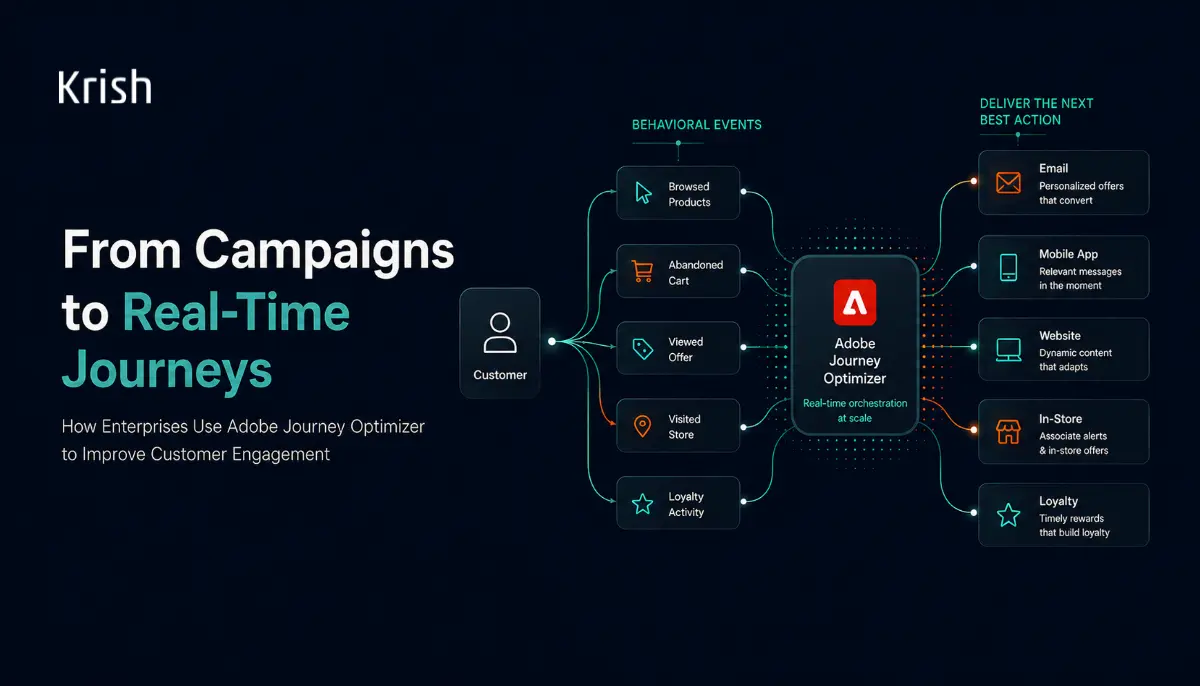
How Enterprises Use Adobe Journey Optimizer to Improve Customer Engagement
20 April, 2026 Brands are sitting on petabytes of customer data, yet 76% of consumers still experience deep frustration when interactions feel entirely generic, as revealed by McKinsey. Marketing teams know the gaps exist. They see the abandoned carts, the unread emails, and the fragmented experiences across channels. The problem is rarely a lack of intent. It is a lack of architectural capability.
Subscribe with Us!
Never miss any post, stay tuned!
Trusted by leading brands


