Introduction
Online shopping has gotten weird in the best possible way. My kid tried on sneakers last week using her phone’s camera, virtually placing them on her feet before buying. No trip to the mall, no awkward conversations with sales staff. Just point, click, done. That’s where we are now.
If you’re thinking about building or rebuilding an eCommerce store, you’ve probably stumbled across Adobe Commerce. Maybe you know it by its old name, Magento. You may be wondering if it’s still relevant when everyone’s cousin is launching Shopify stores.
Here’s the deal: Adobe Commerce isn’t for everyone, but for certain businesses, it’s still the heavyweight champion. Let me explain when it makes sense and when you should look elsewhere.
What Happened to Magento Anyway?
Quick history lesson because this confuses people. Adobe bought Magento back in 2018. They didn’t kill it off or ruin it (which honestly surprised some folks). Instead, they poured money into it, integrated it with their other tools, and split it into two offerings.
There’s Magento Open Source, which is free. Well, “free” like a puppy is free. You don’t pay licensing fees, but you’ll definitely pay for developers, hosting, and everything else. Then there’s Adobe Commerce, the enterprise version with more bells and whistles and a price tag that’ll make your CFO wince.
Adobe hasn’t just slapped its logo on it and called it a day. They’ve actually improved the platform substantially. Better performance, AI features that aren’t just marketing nonsense, and actual, useful integrations with their other products. It’s legitimately better than it was five years ago, which you can’t say about every enterprise software acquisition.
Who Should Actually Use This Thing?
I’m gonna save you some time. If you’re selling handmade jewelry or running a small boutique with 50 products, Adobe Commerce is probably overkill. Shopify will get you launched faster and cheaper. Nothing wrong with that.
But let’s say you’re doing $10 million annually and growing fast. Or you’re selling both to consumers and businesses. Or you need to run storefronts in six countries with different currencies and tax rules. Or you’ve got 10,000 SKUs and complex pricing rules. That’s when Adobe Commerce starts making sense.
The thing can handle serious complexity without falling apart. I’ve seen implementations managing hundreds of thousands of products across multiple brands and countries. Try doing that on most SaaS platforms and watch your costs spiral out of control.
The B2B stuff is particularly solid. Most eCommerce platforms treat B2B like an afterthought, bolting on features that feel clunky. Adobe Commerce builds it from the ground up. Custom catalogs for different customer groups, quote management, approval workflows, and company hierarchies. It’s all there.
And you can customize basically anything. That’s both a blessing and a curse. You’re not stuck waiting for Adobe to build the exact feature you need. Your developers can build it themselves. But that also means you need good developers and a real budget.
Let's Talk Money (Because Everyone's Thinking It)
Adobe Commerce Cloud starts around $20,000 annually for small operations. Sounds reasonable until you realize that’s just licensing. For bigger businesses, licenses can hit six figures depending on your gross merchandise value.
Then add development. A decent implementation costs a minimum of $50,000 to $150,000. That’s for something fairly standard. Custom features, complex integrations, unique workflows? Add more zeros.
Hosting infrastructure, ongoing maintenance, security updates, and feature additions. It all adds up. Budget at least $100,000 annually for a mid-sized operation once you’re up and running.
Now, before you close this tab in horror, consider what you’re getting. Can you launch new products faster than competitors? Can you personalize experiences in ways that boost conversion rates by 2-3%? Can you handle Black Friday traffic without your site crashing while you watch revenue evaporate?
For a business doing $20 million annually, a 2% conversion rate improvement pays for the entire platform investment. That math works. For a business doing $2 million annually, it probably doesn’t. Be honest about your scale and trajectory.
How Development Actually Works Now
Building an Adobe Commerce store in 2025 looks nothing like it did in 2015. Back then, you’d hire some developers, they’d customize a theme, maybe add some extensions, and you’d launch. Pretty straightforward.
Now? It’s way more sophisticated. And honestly, more interesting if you’re into this stuff.
Starting With Strategy (Not Code)
Every good project I’ve seen starts with brutal honesty about what you’re trying to accomplish. Not “we need a website” but actual, specific goals.
What conversion rate makes this profitable? What’s your customer acquisition cost? What percentage of traffic is mobile? Are you planning international expansion in the next two years? Do you need to integrate with your existing ERP system that’s held together with duct tape and prayers?
These aren’t abstract questions. They fundamentally shape your technical decisions.
Example: If 75% of your customers are on mobile and you’re targeting Gen Z, you might build a Progressive Web App instead of a traditional website. It feels faster, works offline (kinda), and can be installed on home screens like a native app.
If you’re planning to expand into Europe and Asia within 18 months, you should architect for multi-region deployment from day one. Retrofitting that later is painful and expensive.
The Big Architectural Decisions
Cloud hosting is basically mandatory at this point. You could theoretically run Adobe Commerce on a server in your office, but why would you? Cloud platforms like AWS or Google Cloud give you automatic scaling (your site doesn’t crash when you’re featured on Good Morning America), global distribution (fast load times everywhere), and reliability you can’t match with on-premise hardware.
Adobe Commerce Cloud handles most infrastructure complexity for you. Less control, but also less to manage. For businesses without dedicated DevOps teams, that’s often the right call. For companies that need specific configurations or want to optimize costs aggressively, self-hosting on cloud infrastructure gives more flexibility.
The headless commerce question comes up constantly. Traditional Adobe Commerce handles both the backend (products, orders, customer data) and frontend (what customers see). Headless splits these apart. Adobe Commerce becomes purely an API serving data, while you build the frontend separately using frameworks like Next.js or React.
Why bother? Performance mainly. You can build incredibly fast experiences that feel snappy and responsive. You can also reuse the same backend for your website, mobile app, and any other customer touchpoint.
The downside is complexity. You’re maintaining two systems instead of one. You need frontend developers who know React, not just PHP developers familiar with Magento. For many businesses, traditional architecture works fine and costs less to maintain.
Microservices sound great in conference talks. Breaking your application into smaller, independent services that handle specific functions. Product catalog as one service, recommendations as another, checkout as a third.
In practice, microservices introduce substantial complexity. You’re deploying and monitoring multiple services, debugging across system boundaries, and managing inter-service communication. Unless you’re at a significant scale or have specific technical needs that demand it, starting simple and extracting services only when necessary makes more sense.
Frontend: Speed Obsession
People bail if your site is slow. Three seconds feels like an eternity. Google now uses page speed as a ranking factor, so slow sites rank worse in search results.
Modern Adobe Commerce implementations obsess over performance. Images lazy lazy-loaded (only downloading when you scroll to them). JavaScript that isn’t immediately needed gets deferred. Content Delivery Networks serve assets from servers geographically close to users. Browser caching is configured aggressively.
Progressive Web Apps have become standard for serious Adobe Commerce stores. They load almost instantly on repeat visits, work offline to some extent, and feel responsive in ways traditional websites don’t.
The user experience innovations are legitimately cool. AI-powered search understands questions like “comfortable running shoes for flat feet under $100” instead of just keyword matching. Augmented reality lets customers see how furniture looks in their actual living room before buying. Chatbots that don’t suck (finally) can answer complex questions without frustrating people.
This isn’t science fiction or future-thinking. These features exist today and measurably increase conversion rates when implemented well.
AI That Actually Does Something
Everyone’s talking about AI. Most of it is hype. But some applications in e-commerce genuinely work.
Product recommendations have gotten creepy good. By analyzing purchase patterns across thousands of customers, machine learning spots relationships humans would never find. The algorithms consider browsing behavior, cart composition, seasonal trends, past purchases, and even time of day. When you see “customers also bought,” and it’s eerily relevant, that’s why.
Chatbots have improved dramatically. Early versions were infuriating, scripted nightmares that couldn’t handle anything beyond basic FAQs. Modern ones using large language models can handle nuanced customer service inquiries, guide product selection, and escalate to humans only when truly necessary.
I’m more skeptical of dynamic pricing. The technology works (adjusting prices in real-time based on demand, inventory, competitor pricing, and even individual customer behavior), but it raises ethical questions. Is it fair to charge different customers different prices? That’s above my pay grade, but businesses are definitely using it.
Predictive inventory management helps avoid stockouts and overstock situations. By analyzing historical sales, seasonal patterns, and external factors, AI forecasts demand with impressive accuracy. This isn’t flashy, but it meaningfully impacts profitability.
Making Everything Talk to Each Other
Your eCommerce store doesn’t exist in isolation. It needs to communicate with your other business systems. This is where many implementations struggle.
ERP integration (SAP, Oracle, Microsoft Dynamics) ensures product information, inventory levels, and order data flows between systems. Without solid integration, you get manual data entry, errors, and angry customers who ordered products you don’t actually have in stock.
CRM integration (Salesforce, HubSpot) connects eCommerce data with broader customer relationship management. Every order, abandoned cart, and product view becomes data informing your marketing and sales.
PIM (Product Information Management) systems become essential when managing thousands of SKUs. They’re the single source of truth for product data, feeding Adobe Commerce and every other sales channel.
Order Management Systems handle modern fulfillment complexity. Buy online, pick up in store. Return online purchases at physical locations. Split shipments between warehouses. This requires sophisticated orchestration.
Marketing automation platforms need real-time eCommerce data for targeted campaigns. Abandoned cart emails, post-purchase follow-ups, and reactivation campaigns. Your eCommerce platform must share data with marketing tools seamlessly.
The Unsexy Operations Stuff
Here’s what most articles skip because it’s boring: the operational infrastructure keeping everything running.
CI/CD pipelines (Continuous Integration/Continuous Deployment) automate testing and deploying code. Instead of manually uploading files and hoping nothing breaks, developers commit code to a repository, automated tests run, and if everything passes, code deploys automatically to production.
This sounds like overkill, but it’s actually risk reduction. Manual deployments invite human error. Automation makes deployments boring and predictable, which is exactly what you want.
Automated testing catches bugs before customers see them. Unit tests verify that individual functions work. Integration tests ensure that different system parts work together. End-to-end tests simulate actual user journeys. Load tests verify your infrastructure handles traffic spikes.
Real-time monitoring tools like New Relic watch your site 24/7, alerting you immediately when something breaks. Response times slowing down? You’ll know before customers complain. Error rates spiking? Your team gets paged instantly.
This infrastructure isn’t free. It requires skilled DevOps engineers and ongoing investment in tools. But the alternative (discovering your site is down because customers are tweeting about it) is much worse.
Security Isn’t Optional
If you’re processing payments, PCI-DSS compliance is mandatory. European customers? GDPR compliance isn’t optional. California residents? CCPA applies.
These regulations might seem like bureaucratic nonsense, but they reflect genuine customer concerns about data privacy. Businesses treating security as an afterthought end up in headlines for the wrong reasons.
Two-factor authentication for admin accounts. Regular security audits and penetration testing. Web Application Firewalls block common attacks. Encryption for data in transit and at rest. Regular security patches and updates.
Adobe releases security patches regularly. Applying them promptly isn’t optional. Most successful breaches exploit known vulnerabilities for which patches already exist. Businesses get hacked not because technology failed, but because they didn’t apply available updates.
What's Actually Worth Paying Attention To
The e-commerce landscape keeps evolving. Some trends are genuine shifts reshaping the industry. Others are overhyped fads that’ll fade. Here’s what matters:
Composable commerce means assembling best-of-breed components instead of using one monolithic platform. Adobe Commerce for catalog management, Contentful for content, Algolia for search, and Stripe for payments.
The appeal is flexibility. You’re not locked into one vendor’s vision. The challenge is complexity. You’re now making multiple systems work together, monitoring more moving parts, and managing more vendor relationships.
Sustainability features are becoming differentiators. Younger customers especially care about environmental impact. Carbon footprint tracking for shipments, eco-friendly shipping options, and clear labeling of sustainable products. These aren’t just feel-good additions. They influence purchase decisions.
Voice commerce hasn’t exploded as predicted, but it’s growing for specific use cases. “Alexa, reorder paper towels” is genuinely useful for commodity purchases. For discovery and browsing, voice interfaces still feel awkward. This’ll likely remain a complementary channel rather than replacing visual shopping.
Social commerce is massive and growing. Buying directly within Instagram, TikTok, or Facebook without leaving the app reduces friction significantly. For certain demographics and product categories, social commerce is where your customers already are.
Web3 technologies like cryptocurrency payments and NFTs generate buzz but remain niche. Some businesses have found genuine use cases (NFTs as proof of authenticity for luxury goods). For most, these are solutions looking for problems.
Measuring What Actually Matters
You can’t improve what you don’t measure. Modern Adobe Commerce implementations track metrics that actually correlate with business success.
Conversion rate is obvious. What percentage of visitors buy something? But break it down by traffic source, device type, new versus returning customers, and time of day. The patterns inform optimization efforts.
Average order value tells you how much customers spend per transaction. Product recommendations, bundle offers, and free shipping thresholds aim to increase this metric.
Customer lifetime value matters more than single transaction value. Acquiring customers is expensive. Real profitability comes from repeat purchases. Businesses optimizing for CLV make different decisions than those focused purely on acquisition.
Cart abandonment rate reveals checkout friction. If 70% of people adding items never complete a purchase, you’ve got a problem. Testing different checkout flows, payment options, and trust signals can dramatically improve this.
Core Web Vitals (page load speed, interactivity, visual stability) aren’t just technical metrics. They correlate directly with conversion rates. Improve your scores and watch revenue increase.
Mobile conversion rate deserves separate attention. If the mobile conversion rate is significantly lower than the desktop rate, your mobile experience needs work. With mobile traffic often exceeding 60% for consumer brands, this isn’t optional.
Finding the Right Development Partner
Unless you’ve got an exceptional in-house team, you’ll need a development partner for custom Adobe Commerce work. Choosing wrong can be catastrophic.
Adobe Commerce certification matters, but it isn’t everything. Look for Solution Specialist and Developer certifications indicating actual platform expertise, not just someone who took an online course.
Cloud infrastructure experience is increasingly critical. Can they architect for AWS or Google Cloud? Do they understand Docker and Kubernetes? Can they set up proper CI/CD pipelines?
Portfolios and case studies reveal more than marketing claims. Ask for specific examples similar to your project. Talk to references and ask pointed questions about what went wrong and how the team handled it.
Ongoing support capabilities matter as much as initial development. Your site won’t maintain itself after launch. Security patches, performance optimization, and feature additions all require ongoing engagement. Make sure your partner offers meaningful support, not just “email us if something breaks.”
Communication and project management separate great partners from mediocre ones. Technical skill matters, but so does explaining complex topics clearly, meeting deadlines, and navigating inevitable challenges.
What It All Comes Down To
Custom Adobe Commerce development in 2026 is sophisticated, strategic work. It’s not spinning up a template and calling it done. It’s architecting a platform that scales with your business, integrates with existing systems, delivers excellent customer experiences, and adapts as technology and expectations evolve.
The investment is significant in both money and organizational attention. For businesses with serious eCommerce ambitions, handling complex catalogs, serving multiple markets, or requiring deep customization, Adobe Commerce remains one of the most powerful platforms available.
The key is approaching it strategically. Start with clear business objectives. Make architectural decisions based on your actual needs, not the latest hype. Invest in proper infrastructure and security from day one. Measure what matters and optimize continuously.
Businesses winning with eCommerce in 2025 aren’t necessarily those with the fanciest technology or biggest budgets. They’re the ones understanding customers deeply, using technology strategically to serve those customers better, and executing consistently well on fundamentals.
If you’re considering custom Adobe Commerce development, take time to plan properly. Talk to multiple partners. Understand true costs and ongoing commitments. Make sure your organization is ready for the complexity that comes with a powerful, flexible platform.
Done right, custom Adobe Commerce development becomes a genuine competitive advantage. Done poorly, it becomes an expensive distraction. The difference lies in approaching it with a clear strategy, realistic expectations, and commitment to ongoing optimization.
The future of e-commerce is being built right now. Whether you’ll be leading that future or scrambling to catch up depends on the decisions you make today.
Table of Content
- Introduction
- What Happened to Magento Anyway?
- Who Should Actually Use This Thing?
- Let's Talk Money (Because Everyone's Thinking It)
- How Development Actually Works Now
- What's Actually Worth Paying Attention To
- Measuring What Actually Matters
- Finding the Right Development Partner
- What It All Comes Down To
Subscribe with Us!
Never miss any post, stay tuned!

Manthan is the Director of Solutions at Krish, specializing in solution architecture, strategy, and client engagement. With expertise in eCommerce, Enterprise CMS, cloud solutions, and integrations, he is passionate about bridging technology and business to drive innovation and efficiency. As a techno-functional consultant and SME, he helps brands optimize technology stacks, streamline operations, and scale effectively, enabling sustainable digital transformation in an ever-evolving landscape.
Recommended Reading:
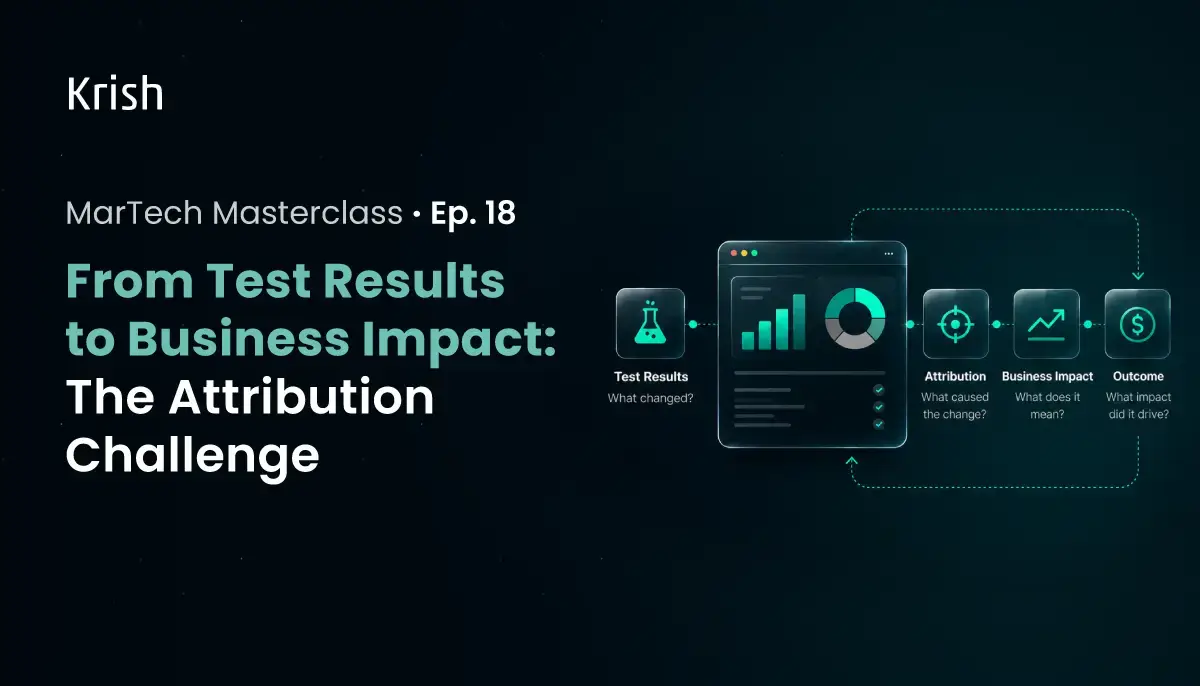
From Test Results to Business Impact: The Attribution Challenge – MarTech Masterclass Series Ep | 18
2 July, 2026 A variant reaches statistical significance. The team celebrates, ships the winner, and moves on to the next experiment. Weeks later, the metrics leadership actually tracks have not moved. Revenue per session is flat. The number the finance team questions every quarter shows no change that can be credited to the test. The experiment was run correctly. The result was real. And somehow, nothing changed.
Subscribe with Us!
Never miss any post, stay tuned!
Trusted by leading brands


