Introduction
With the Jan 2026 GA4 update, Google Analytics 4 is clearly moving beyond its role as a reporting platform. It is evolving into a system that supports budget planning, forecasting, and more confident business decision-making.
While some of the newer capabilities are still in beta, they signal a clear direction. GA4 is being positioned to help businesses not just understand what happened, but plan what should happen next.
For organizations already using GA4, this shift raises an important question: is your current setup ready to support these advanced use cases? For a refresher on GA4 fundamentals and how it differs from legacy analytics, this Google Analytics 4 FAQs guide provides helpful context:
What’s Changed in GA4
The latest advancements in Google Analytics 4 features focus on areas that have long been pain points for marketers and leadership teams: budget accountability, conversion clarity, and attribution accuracy.
Key updates include:
GA4 cross-channel budget planning (beta)
GA4 now allows marketers to model budget scenarios across channels and estimate how changes in spend may impact conversions and outcomes. This early version of the GA4 Budgeting Feature brings planning conversations closer to performance data, reducing reliance on external spreadsheets and assumptions.
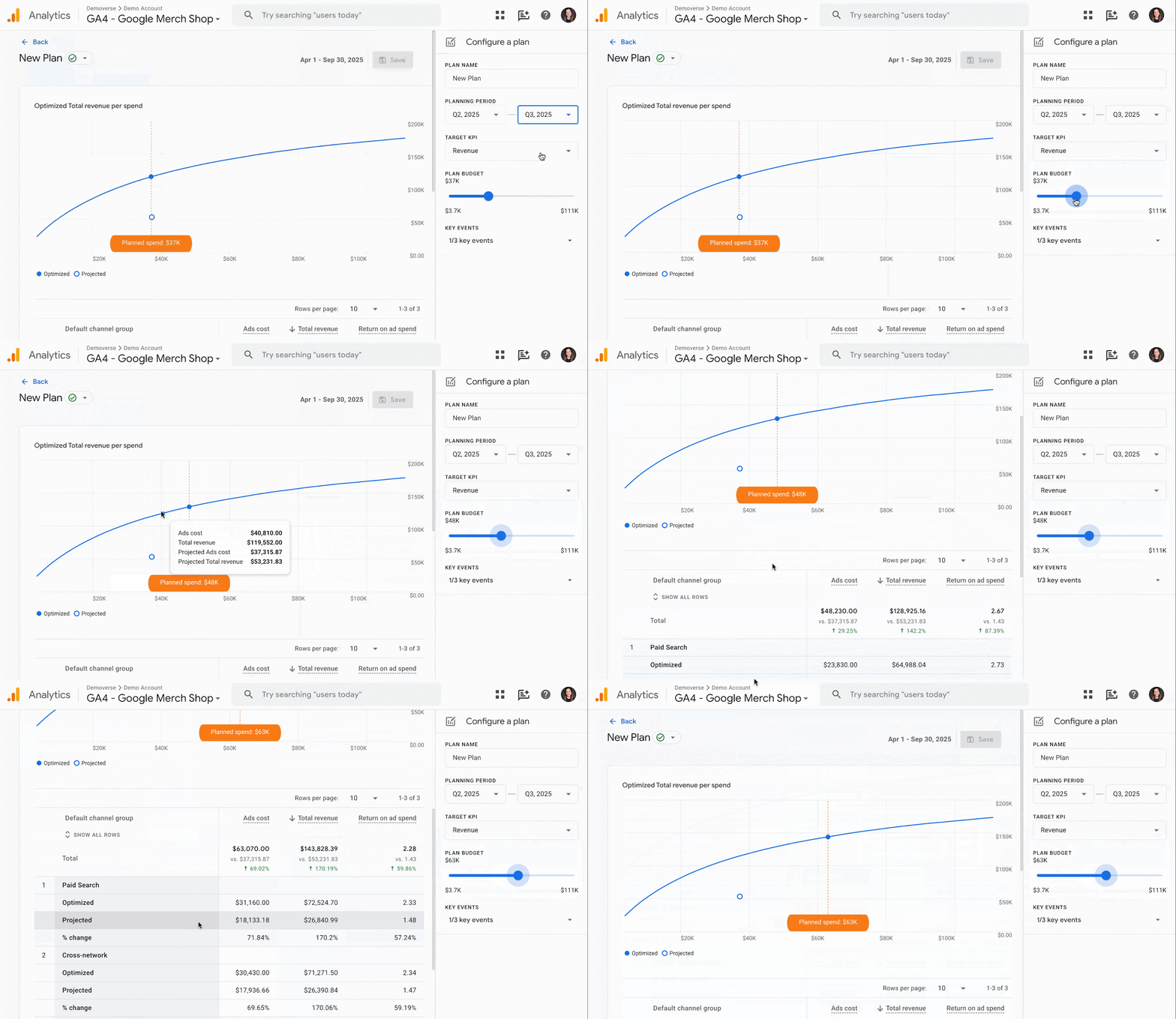
This marks an important step toward more practical GA4 budget planning, especially for teams managing complex, multi-channel investments.
Enhanced conversion configuration
GA4 offers more flexibility in defining, grouping, and evaluating conversions, including the use of GA4 custom dimensions. This allows teams to align measurement with real business outcomes instead of tracking a long list of loosely defined events.
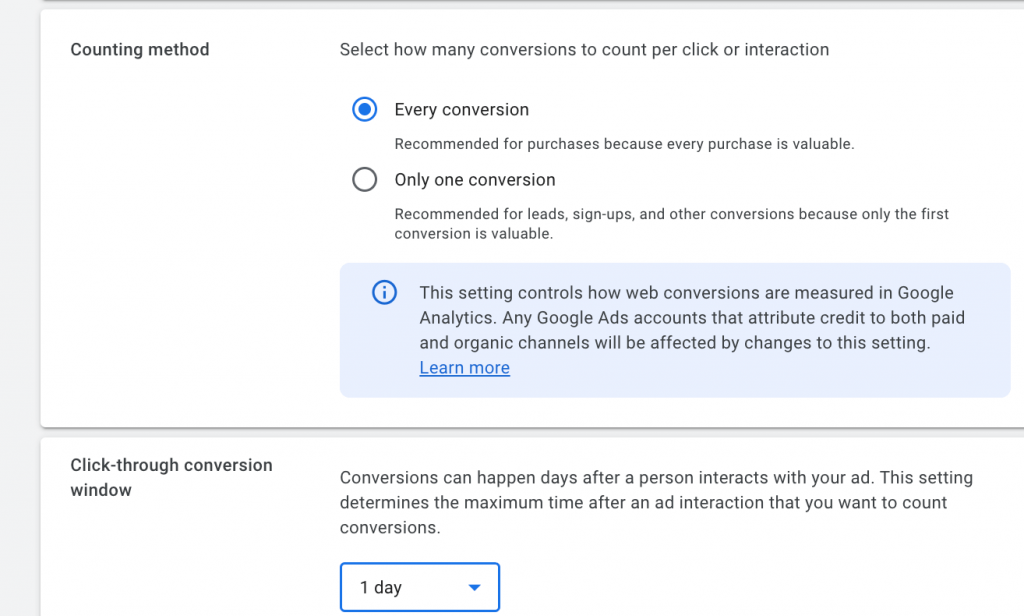
However, these improvements only add value when conversions are set up correctly. Many organizations still struggle with inconsistent or inflated conversion data, which limits the effectiveness of attribution and planning.
It is also worth addressing common configuration issues that quietly undermine data quality. This article on 10 Critical GA4 Configuration Mistakes Costing You Revenue from our recent MarTech Masterclass Series highlights frequent problems that can distort attribution and
New attribution analysis reporting (beta)
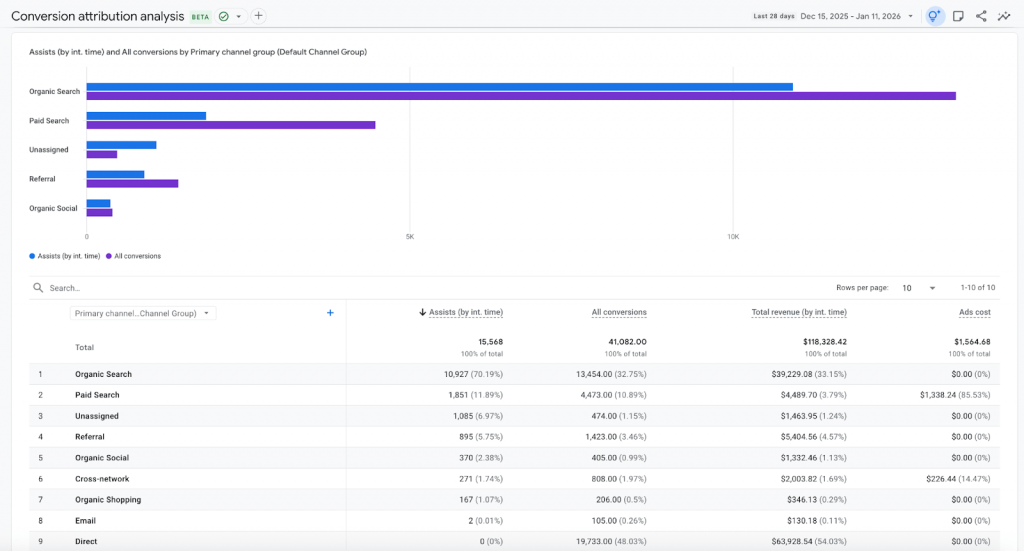
The latest release introduced a new Conversion attribution analysis report within the advertising workspace that helps teams see the real value of their marketing channels across the full customer journey, not just the final click.
Instead of treating conversions as isolated outcomes, this report shows how different touchpoints work together to move users from first interaction to conversion. It does this through two practical views:
Assisted conversions (Last Click)
This view highlights “assists”, touchpoints that influenced users early or mid-journey but were not the final click. It is especially useful for uncovering the true impact of upper-funnel channels like YouTube or Demand Gen, which often create intent before a brand search or direct visit closes the conversion.
Refined funnel analysis (Data-driven attribution)
This view breaks journeys into Early, Mid, and Late stages and clearly separates single-touchpoint paths from multi-touchpoint journeys. This makes it much easier to understand which campaigns help close complex, multi-step journeys versus those that drive conversions on their own.
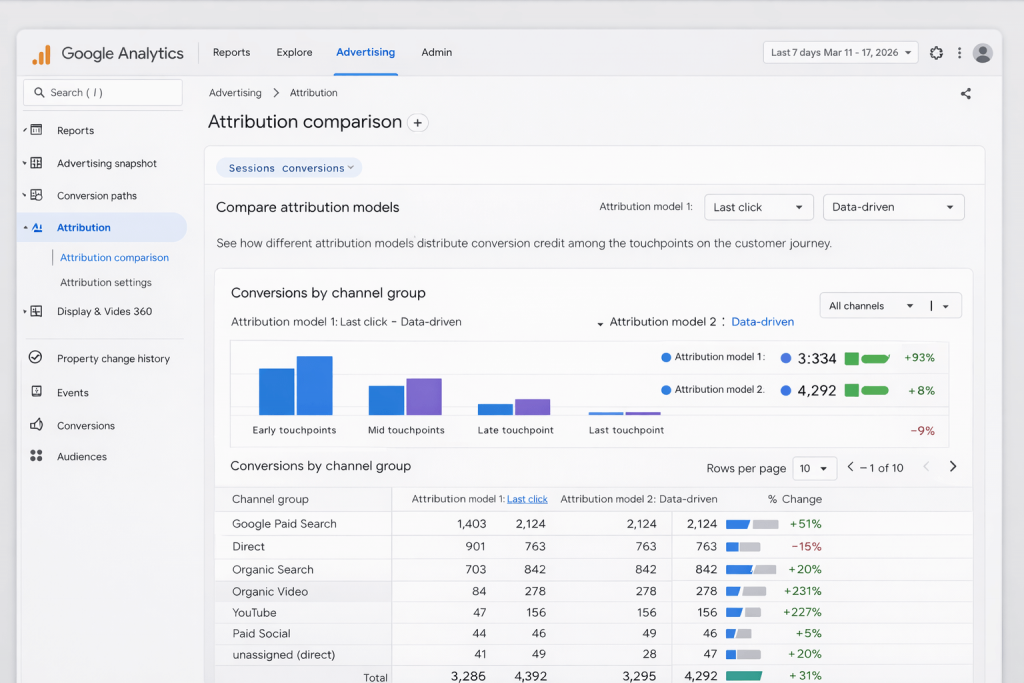
Together, these views help advertisers move away from last-click bias, justify upper-funnel investment with confidence, and build a more balanced budget strategy that rewards every stage of the funnel, not just the final interaction.
Collectively, the latest GA4 features in 2026 point to a broader shift: analytics is becoming a decision-support layer, not just a reporting tool.
(General Note: These features are rolling out and may not be available for all GA4 properties yet.)
Bringing Budget Planning Closer to Analytics
One of the most meaningful changes is that GA4 budget planning is now more closely tied to performance data.
Instead of exporting reports and rebuilding models in isolation, teams can begin evaluating budget allocation and projected impact directly within GA4. This shortens planning cycles and increases confidence during budget reviews, especially in quarterly and annual planning.
As GA4 cross-channel budgeting capabilities mature in 2026, organizations with clean, well-governed data will be far better positioned to take advantage of them.
Why This Matters for Business Leaders
These updates address several long-standing challenges in digital measurement and performance accountability.
More confidence in budget decisions
Leaders can explore “what-if” spend scenarios to understand potential outcomes before committing budgets, reducing uncertainty during planning cycles.
Clearer ROI narratives
Improved attribution helps explain how upper- and mid-funnel activity supports revenue. This makes it easier to justify investments that previously appeared inefficient due to last-click bias.
Lower reporting risk
Stronger conversion controls help reduce discrepancies between GA4 and ad platforms, improving trust in the data used for forecasting, reviews, and leadership discussions.
For organizations operating across multiple channels, these changes help align analytics with financial planning and long-term growth strategy.
Why GA4 Foundations Matter More Than Ever
Advanced features like budgeting and attribution only work when the underlying GA4 setup is solid. In practice, many teams still operate with misconfigured events, duplicated conversions, or inconsistent definitions across platforms.
If you are planning to rely more heavily on GA4 for budgeting and strategic decisions, a structured review of your implementation is critical. This GA4 Audit Guide, Checklist & Best Practices outlines how to evaluate and strengthen your GA4 foundation before these capabilities become central to decision-making.
Further reading
Free ebookThe DIY 20-Point GA4 Audit Checklist for Enterprises
Spot tracking gaps, fix attribution blind spots, and score your GA4 setup across 20 checks — with a clear priority order for fixes ranked by business impact.
Bottom Line
With the latest January 2026 release, Google Analytics 4 is steadily evolving from a measurement tool into a platform that supports strategic planning and decision-making.
Teams that prepare early by strengthening their GA4 setup, conversion strategy, and attribution logic will be better positioned to justify spend, understand true channel impact, and make confident, data-backed decisions as GA4 continues to mature.
Need a Quick GA4 Health Scan?
If you want to validate your GA4 setup, improve conversion accuracy, or understand how these new Google Analytics 4 features apply to your business, a focused GA4 audit is the fastest way to gain clarity and reduce risk.
Table of Content
Subscribe with Us!
Never miss any post, stay tuned!

As Director - Marketing, Zenul leads the marketing and branding at Krish. He brings with him an in-depth understanding of the evolving digital ecosystem and has a proven expertise and experience in strategic planning, market and competition analysis, creating and implementing client-centered, lead-gen and brand marketing campaigns. He has a heart for technology innovation and has been a keynote speaker on various platforms.
Recommended Reading:
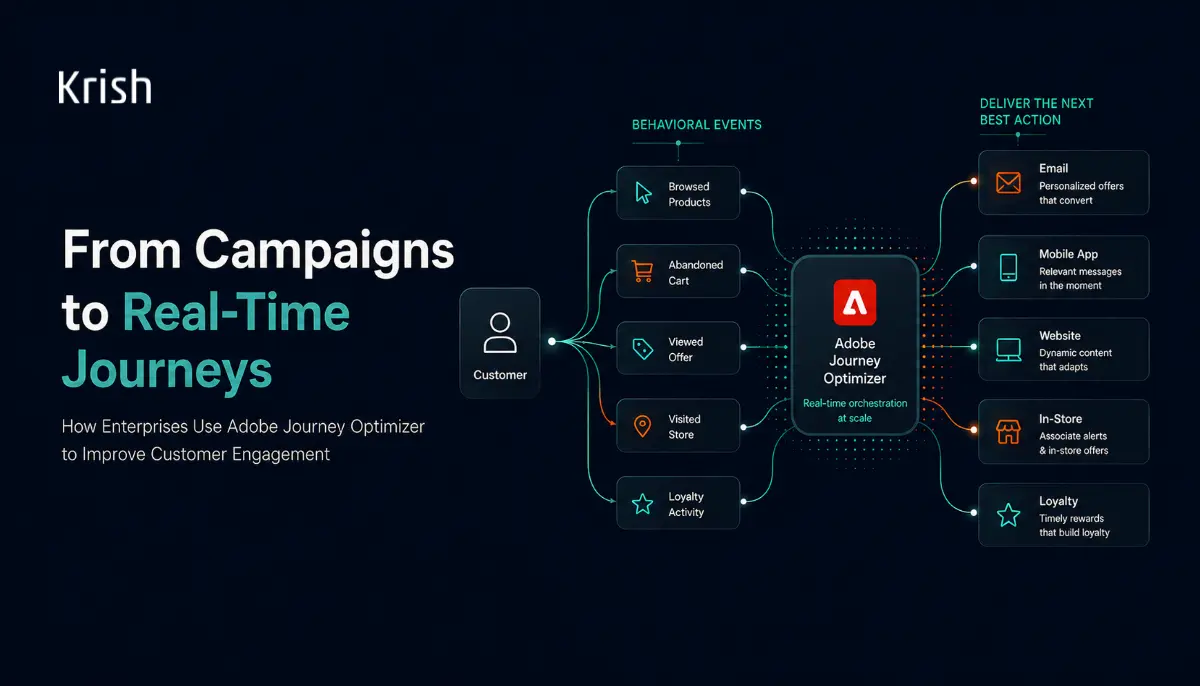
How Enterprises Use Adobe Journey Optimizer to Improve Customer Engagement
20 April, 2026 Brands are sitting on petabytes of customer data, yet 76% of consumers still experience deep frustration when interactions feel entirely generic, as revealed by McKinsey. Marketing teams know the gaps exist. They see the abandoned carts, the unread emails, and the fragmented experiences across channels. The problem is rarely a lack of intent. It is a lack of architectural capability.
Subscribe with Us!
Never miss any post, stay tuned!
Trusted by leading brands


